FRESH
Fresh bee pollen
Right after collection it has a strong aroma and is more sensitive to storage. It requires fast handling and suitable conditions.
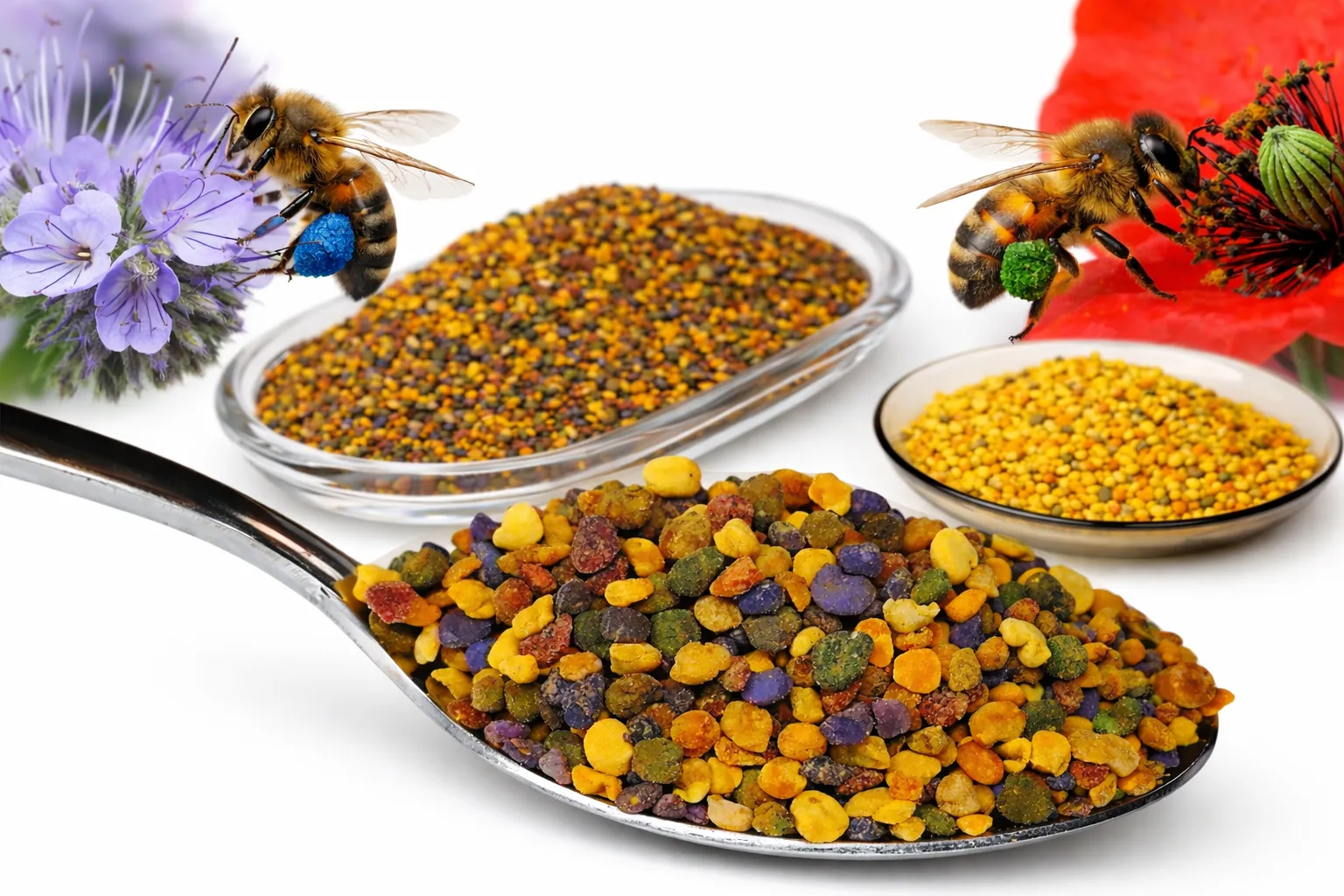
What is bee pollen? This is pollen pellets – small colorful granules collected by bees from blooming plants. In the hive, pollen is a key nutrition source for bee colonies. For people, it’s also interesting because it naturally changes with season, location, and the plant diversity around the apiary.
Why do small amounts often make sense (for example a teaspoon per day)? Bee pollen is concentrated – references commonly describe a wide range of components (proteins, amino acids, B vitamins, minerals, and plant bioactive compounds such as polyphenols and flavonoids). In practice, many people use it as an addition to a varied diet, not as a meal replacement.
We also enter pollen samples into a national bee products competition. In the bee pollen category, we achieved 2nd place (2024) and 1st place (2025). Below you’ll find a clear explanation of what “award-winning bee pollen” means, how to use it, how to store it, and what to watch out for—especially if you have allergies.
We compare bee pollen beyond our own apiary. In professional competitions, samples are often evaluated using a combination of laboratory analyses and expert assessment, so quality is viewed from multiple angles.
In the bee pollen category, we participated in a national bee products competition comparing samples from beekeepers across different regions of Slovakia.
The result was 2nd place (2024) and 1st place (2025) in the bee pollen category. The evaluation typically combines accredited laboratory outputs with expert jury assessment under competition rules.
The evaluation included analyses performed by an accredited laboratory, producing protocols and result records for selected parameters.
For the awards, we keep diplomas, photo documentation of the evaluated sample, and supporting laboratory documentation that complements the overall quality assessment.
Combining lab outputs with expert assessment shows how a specific pollen sample compares with pollen from other beekeepers across different regions.
For customers, it’s practical orientation: known origin, documented handling, and evaluation results from a professional competition context.
Differences between flower pollen, pollen pellets, and fermented pollen (bee bread).
Plants produce pollen grains as part of flowering. Bees collect flower pollen as a natural nutritional component for themselves and for the hive.
Bees shape pollen on their hind legs into small pellets. That’s why this form is often called pollen pellets.
Inside the hive, pollen can also be stored and fermented. This is known as bee bread (perga), a different form processed for the hive’s long-term nutrition needs.
Bee pollen colors (yellow, orange, green, purple, dark) reflect plants blooming in a given period. More colors often mean more diverse sources.
What sources typically mention and what matters in real-life use.
Bee pollen is naturally nutrient-diverse. References commonly mention proteins, amino acids, vitamins and minerals, as well as plant bioactive compounds (for example polyphenols and flavonoids) often discussed in the context of antioxidants.
When people search for “bee pollen benefits”, they most often look for:
This is general information. Bee pollen is not medicine, and for health conditions the right step is professional advice.
Beginner-friendly guidance: amounts, approach and common ways to use it.
A common approach is to start very cautiously and observe your body’s response. Many adults use an indicative range of 1–2 teaspoons per day, but this is general guidance—not a universal medical recommendation.
A popular option is mixing bee pollen with honey and letting it sit in honey for a while. You can also add it to yogurt, porridge, smoothies, or fruit.
If you have health conditions, take medication, or have allergies, consult a professional first.
First days
Start with minimal amounts and monitor tolerance (especially if you have allergies).
Cycles
Many people use it for several weeks and then take a break.
When to be cautious
Pollen allergies, history of strong allergic reactions, chronic conditions or medications = talk to a professional first.
Most common risks: allergies, sensitivity, caution with medication.
Bee pollen can be problematic for sensitive individuals, especially due to allergies. If you experience shortness of breath, swelling, strong rash, or other severe symptoms, stop immediately and seek professional help.
Bee pollen is not medicine. For specific diagnoses, follow professional guidance.
Fresh, dried and fermented pollen (bee bread): how they differ and when they’re used.
Right after collection it has a strong aroma and is more sensitive to storage. It requires fast handling and suitable conditions.
The most common form for longer storage. With proper handling and good packaging, it stays protected from moisture and is practical for daily use.
Made in the hive by fermentation of stored pollen. It’s a different form used by bees as a long-term nutrition reserve.
Colors change with plants around the apiary and with the season.
Pollen colors are a natural “map” of plants in the apiary’s surroundings. As the season progresses, blooming sources change—and with them the colors and composition of pollen.
Long-term tracking helps understand when certain colors appear and how diversity changes over the year.
Daily tracking gives a beekeeper a clear season overview. You can see an example here: MIJA Pollen Calendar.
How to store pollen to keep it dry and stable, and how to get it directly from a beekeeper.
Bee pollen is sensitive to moisture. Proper storage helps preserve quality:
If you want, we can add a short storage FAQ here (fridge vs room temperature, shelf-life by form).
Beekeeping MIJA offers bee pollen via farm-gate sales. Specific packaging and availability depend on the season and current harvests.
Contact and pickup are handled via the Contact section on the English homepage.
Common questions for beginners and people with allergies.
Many people use small daily amounts (for example 1–2 teaspoons for an adult), starting gradually. Tolerance and overall diet matter most.
Most often for composition diversity and as an addition to a varied diet. Experiences are individual.
If you have pollen allergies, take medication, or have chronic conditions, consult a professional.
It means a specific sample was evaluated in a professional bee products competition. In our case: 2nd place (2024) and 1st place (2025).