CANDLES
Beeswax candles
The best-known use is beeswax candles. Their natural aroma and origin make them popular as natural candles for home and for gift sets with honey.
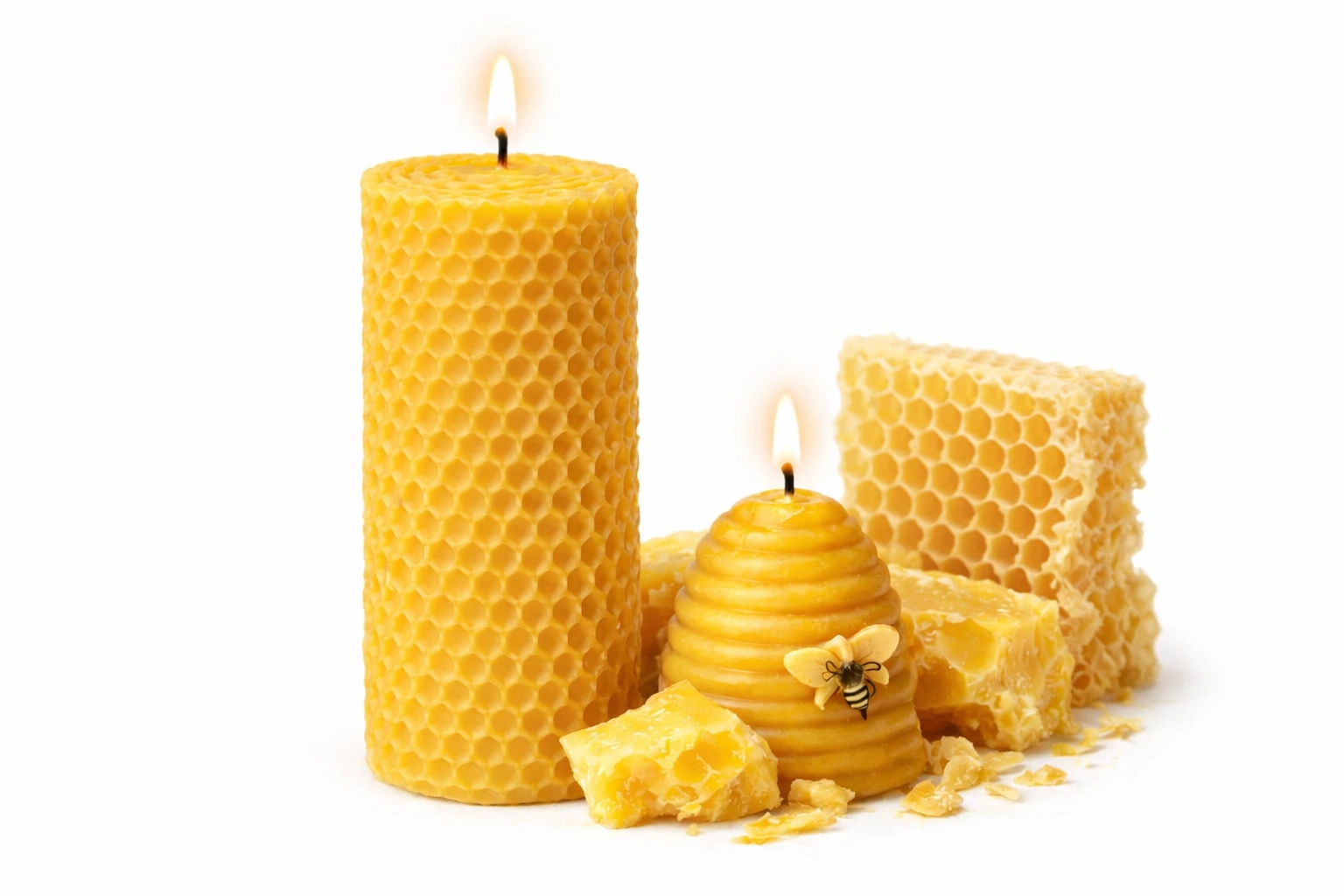
Beeswax is a natural material made in the hive. Bees use it to build combs, where they raise brood and store honey and bee pollen. Thanks to its typical aroma, color and properties, beeswax is a traditional base for beeswax candles and other household items.
Beekeeping MIJA processes its own beeswax and makes beeswax candles — simple and decorative shapes from pure beeswax. Many customers choose them as natural candles for home, seasonal tables and as a thoughtful gift combined with honey and other bee products.
beeswax, hive wax, basic characteristics
Bees produce beeswax in special wax glands and use it to build combs. Combs are the “structure” of the hive — for brood and for storing honey and bee pollen. Beeswax is therefore one of the key bee products alongside honey, pollen and propolis.
After honey extraction, wax cappings and older combs remain. The wax is then cleaned and melted to create usable raw material — beeswax in blocks or sheets. From this processed wax, beeswax candles and other items can be made.
Wax color can range from light yellow to darker shades depending on comb age and nectar flow. Beeswax has a characteristic natural aroma that many people associate with beekeeping and bee products.
Pure wax is used for foundation sheets, beeswax candles, decorations and other products. Raw beeswax and beeswax candles are traditional natural products made by beekeepers.
beeswax candles, natural candles, handmade candles
Beeswax candles are made from pure beeswax and a cotton wick. Because the ingredients are simple and the aroma is naturally present in the wax, many people choose them as natural candles for everyday home use, festive tables and gift sets.
Some customers prefer beeswax candles as an alternative to paraffin candles. The main difference is the origin of the raw material and the overall product story (a local beekeeper vs. mass industrial production).
Typical options include rolled candles (wax sheets), molded candles in different shapes and smaller decorative candles. Availability depends on season and current production.
The exact selection of beeswax candles and raw beeswax changes by season. We confirm types, sizes and prices when arranging direct pickup or gift boxes.
beeswax, candles, common household use
The best-known use is beeswax candles. Their natural aroma and origin make them popular as natural candles for home and for gift sets with honey.
Beeswax is used for foundation sheets placed into frames. Bees then build comb on it — wax returns back into the colony as an essential working material for the bees.
Pure beeswax is also used for decorations and crafts where aroma, appearance and natural origin matter.
Beeswax can be used as a base ingredient in various products. Exact composition depends on the specific recipe — always follow information on the label.
beeswax candles, candle safety at home
When burning beeswax candles, the same safety rules apply as for any candle. A candle is an open flame, so it requires attention and a safe placement.
Let the candle burn long enough for the top layer of wax to melt evenly. This helps reduce tunneling and improves practical use.
Some items may include specific instructions on the label. Always follow the product’s instructions for use and storage.
beeswax, beeswax candles, natural candles
Beeswax candles are made from beeswax and a cotton wick. Many common candles use paraffin or other waxes. The main differences are the raw material origin and the overall product story.
Wax color depends on comb age and nectar flow. That also affects the candle shade — from light yellow to darker tones. Beeswax candles have a natural wax aroma (not added perfumes unless stated on the label).
Store beeswax and beeswax candles in a dry, shaded place away from heat sources and direct sunlight. This helps maintain shape, color and natural aroma for longer.