PROPOLIS
Raw propolis
Store raw propolis in a dry, cool and dark place. Protect it from heat and direct sunlight to keep it stable.
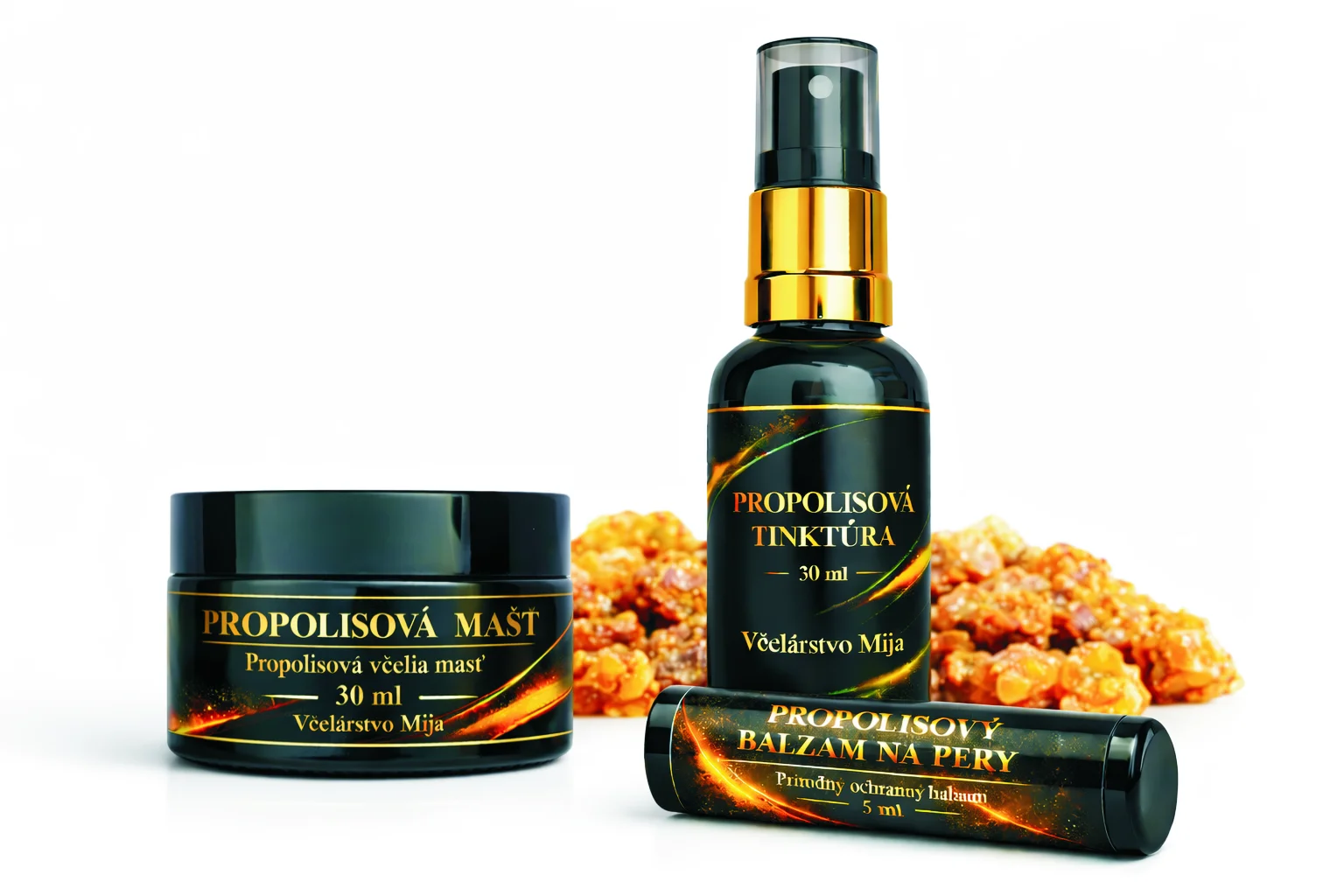
What is bee propolis and why do bees make it?
Bee propolis is a resinous material collected by bees from plant resins.
Bees combine it with beeswax and their own substances. Inside the hive, propolis works as a natural
“seal and protection” — it helps bees seal small gaps and keep the hive environment stable.
What are propolis tincture and propolis ointment?
From raw propolis, two common forms are made: propolis tincture (an alcohol extract)
and propolis ointment (a fat-based topical preparation). These are traditional bee products used mainly
for external skin care.
Online searches often include strong medical claims. On this page, we stick to safe, practical information for topical use. These products are not medicines — for health concerns or persistent skin problems, professional advice from a doctor or pharmacist matters most.
bee propolis, composition and its role in the hive
Bee propolis starts as plant resins collected from buds and tree bark. Bees blend the resin with beeswax and their own substances, creating a dark, aromatic resinous material.
Bees use propolis to seal small cracks, smooth surfaces and support a stable hive environment. Certain parts of the hive and comb can be coated with propolis.
Propolis composition depends on local plants near the apiary. There is no single universal “recipe” — which is why color and aroma naturally vary.
When collected, propolis often appears as solid chunks. These are used to prepare different forms, such as tincture or ointment.
propolis tincture, alcohol extract, topical use
Propolis tincture is an alcohol extract of propolis. It is made by soaking raw bee propolis in alcohol and then filtering out insoluble particles.
Propolis concentration can vary depending on the recipe. That’s why it’s important to follow the label instructions and the producer’s recommendations.
Propolis tincture is typically used topically in small amounts. Because it contains alcohol, it can sting and may dry sensitive skin.
Many websites mix propolis searches with medical claims. Here we focus on safe, practical topical use. For persistent issues, consult a healthcare professional.
For children, sensitive skin, or long-term problems, consult a doctor or pharmacist.
propolis ointment, bee propolis, everyday topical care
Propolis ointment is a fat-based topical preparation where bee propolis is combined with an ointment base. The base can include fats, beeswax and other ingredients depending on the recipe.
Ointment is used externally — apply a thin layer as needed and follow the label instructions. For sensitive skin, it’s reasonable to test on a small area first.
Many people search for “propolis ointment use” as part of basic care for dry, stressed or sensitive skin. Experiences are individual — it is not a guaranteed medical effect.
Propolis tincture
Liquid alcohol extract. Dries quickly, has a strong aroma and may sting due to alcohol.
Propolis ointment
Fat-based topical form. Gentler, stays on the skin and is applied as a thin layer.
Always follow the specific instructions and warnings provided on the product label.
propolis tincture, propolis ointment, allergies, safe use
A simple rule for propolis products: less is more. Follow the label instructions and observe your skin response.
If redness, itching or unusual reactions occur, stop using the product. For significant problems, seek professional help.
Propolis tincture and propolis ointment are not medicines. For health questions, a professional opinion matters most.
propolis storage, tincture, ointment, practical rules
Store raw propolis in a dry, cool and dark place. Protect it from heat and direct sunlight to keep it stable.
Keep the bottle tightly closed and out of reach of children, at room temperature or as stated on the label. Alcohol naturally helps preserve the product.
Store in a cool, dry place protected from sunlight. Close the container carefully after use to avoid moisture and impurities.
The “best before” date and storage details are listed on the label. For bee products, it’s best to follow the producer’s guidance.
bee propolis, propolis tincture, propolis ointment, beekeeper
Bee propolis is the raw hive material. Propolis tincture is an alcohol extract, and propolis ointment is a fat-based topical form for external use.
It’s the same product; differences are usually only in spelling (language/diacritics), not in the principle.
Beekeeping MIJA prepares propolis tincture and propolis ointment from our own propolis. Availability depends on the season and production.